All work

Concept project · 2025

Courage: a safe place to start healing

An app for people changing a habit they feel ashamed of, designed around someone who is quitting smoking. A daily reflection with an AI companion, a small circle of peers on the same journey, and progress shown as courage instead of streaks.

Role
UX and UI design
Platform
Mobile app
Type
Concept project
Scope
Experience direction to final screens
Courage, your safe place to start healing: the wordmark beside a group of six calm illustrated characters

01North star

Courage helps people feel safe, supported, and proud as they turn honest reflection into small, shared moments of growth.

The journey map starts before the download, with what a person quitting says to themselves: “I’ve been thinking about quitting… but I feel ashamed to even talk about it.” and “I wish there was a space where I’m not judged.”

Every decision follows from that. Harsh streaks are replaced by a calm summary of small wins. Likes are replaced by a Courage, a short supportive note from a peer. A relapse opens a conversation instead of resetting a counter.

02The platform

Four screens, one loop

  • Reflection

    Home

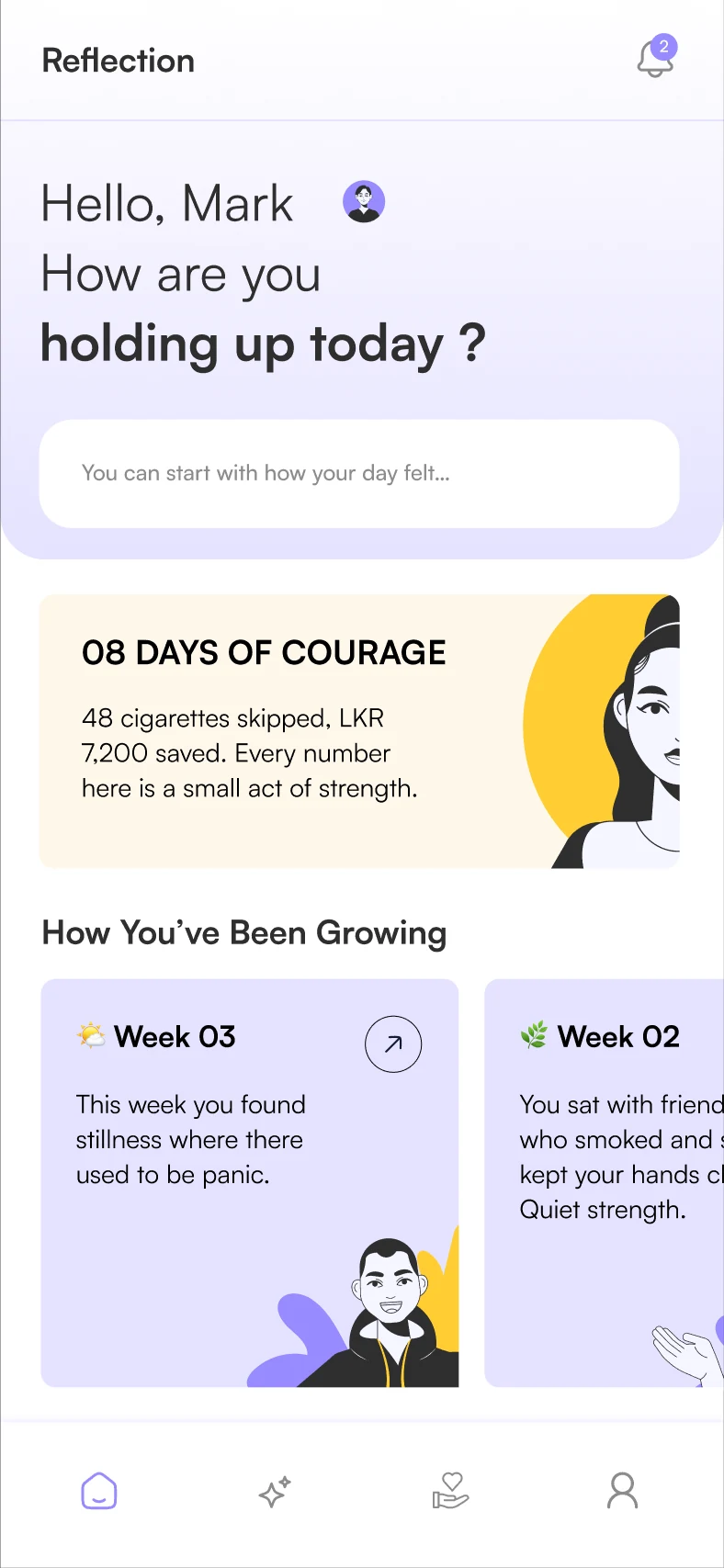
    One question, one input: “How are you holding up today?” Below it, days of courage and weekly growth cards.

  • Courage.ai

    Chat

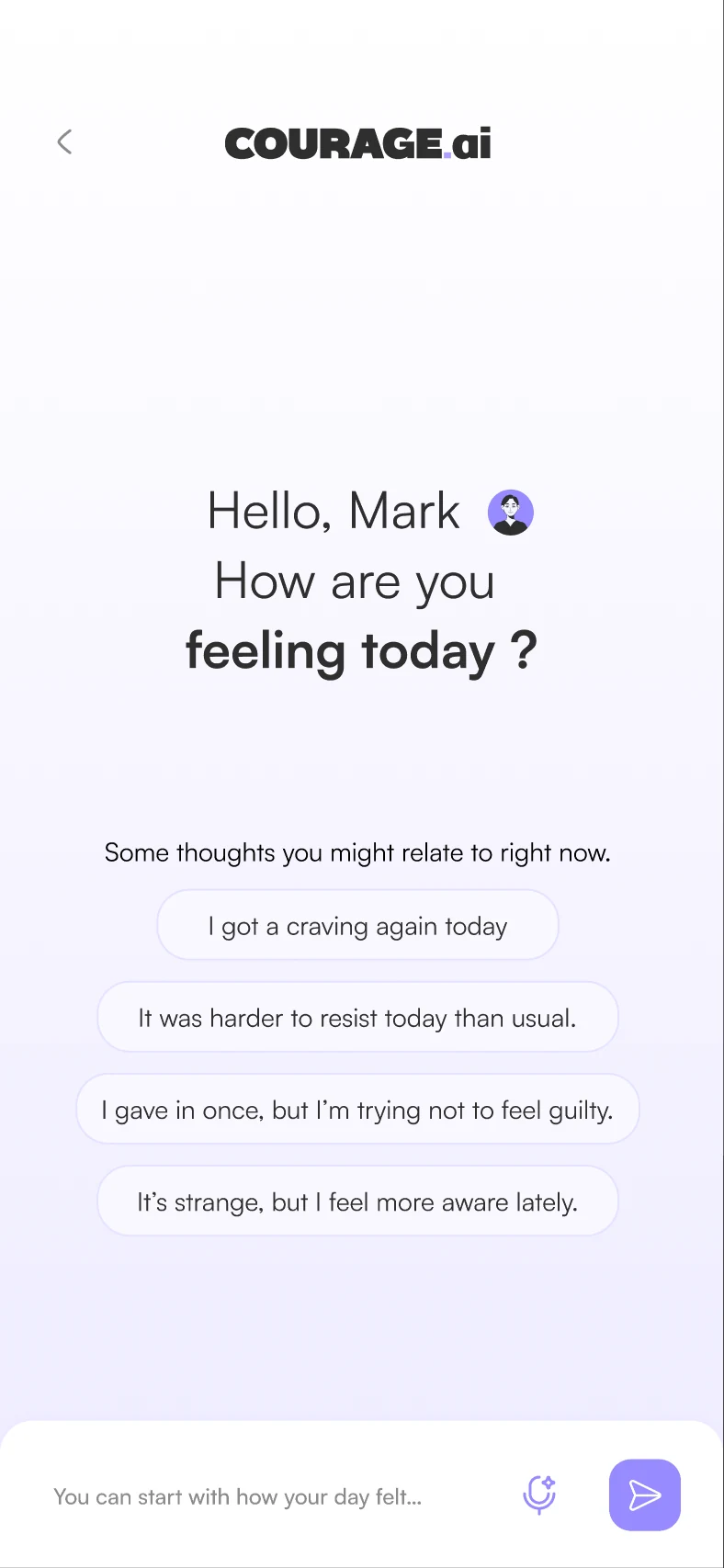
    A one-to-one space to say how the day went, with an AI companion that listens instead of advising.

  • My Circle

    Support group

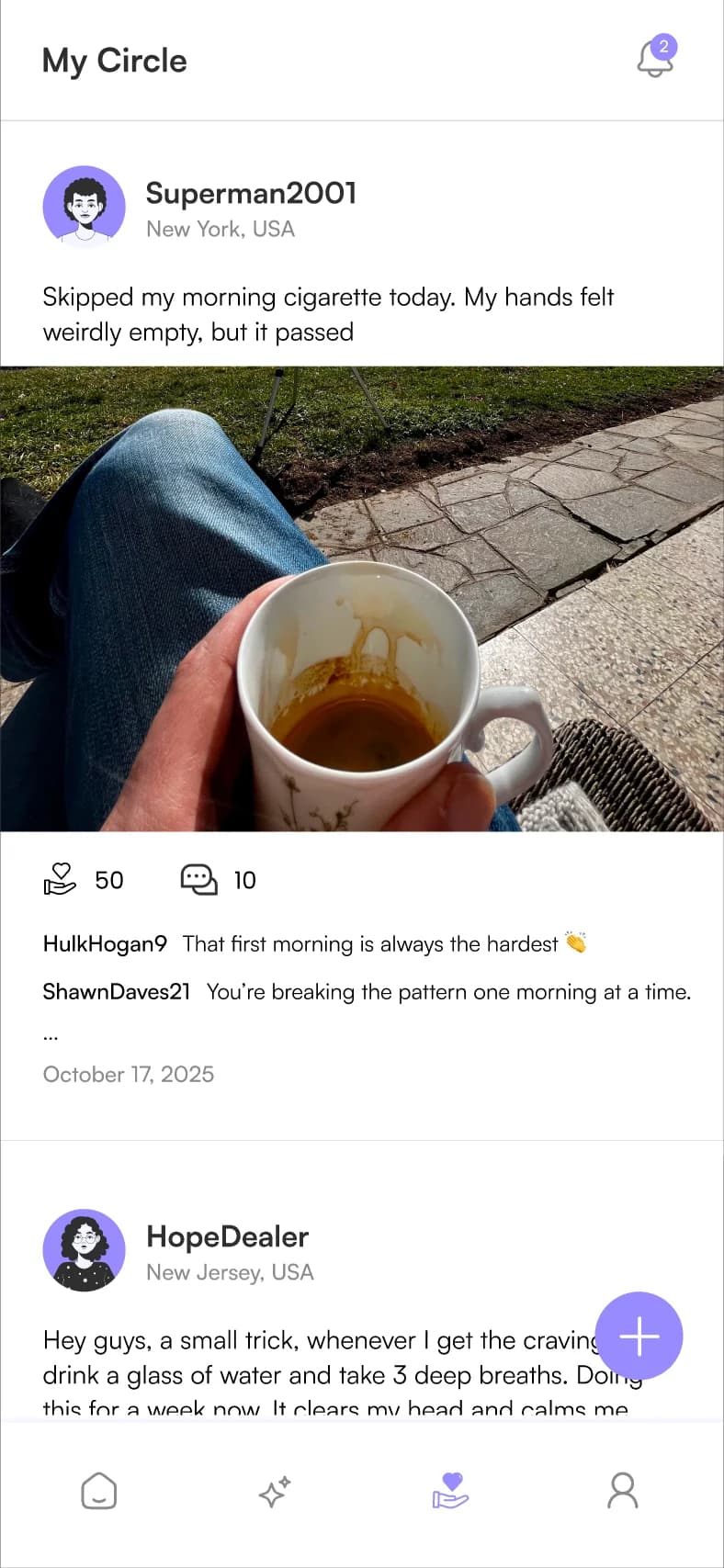
    A small feed of people on the same journey, where a post reads like a journal entry and the reply is a Courage.

  • My Profile

    Progress

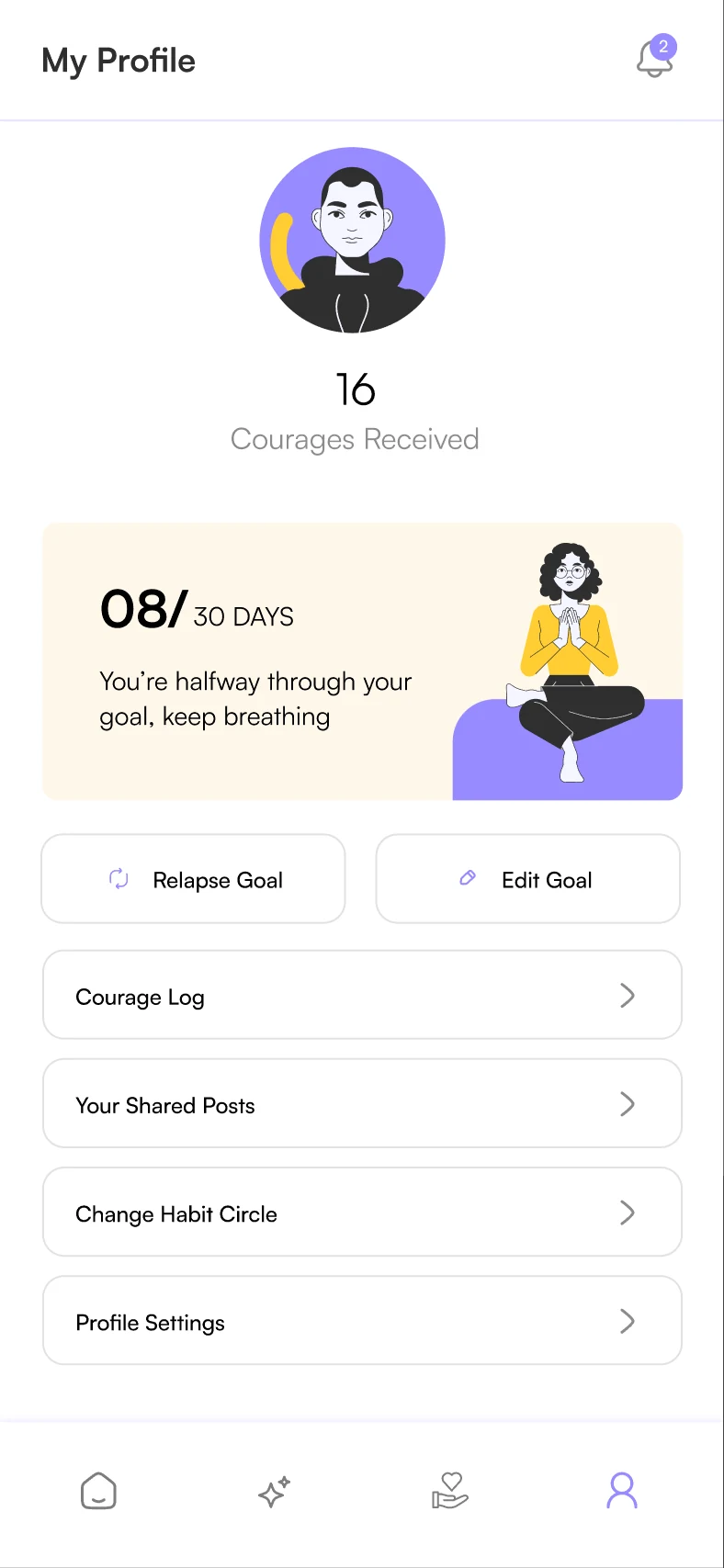
    Courages received, the goal so far, and a way to change or restart the goal without guilt.

  • What a person writes in the chat becomes the weekly growth cards on their home screen, in their own words. Honesty turns into visible progress.
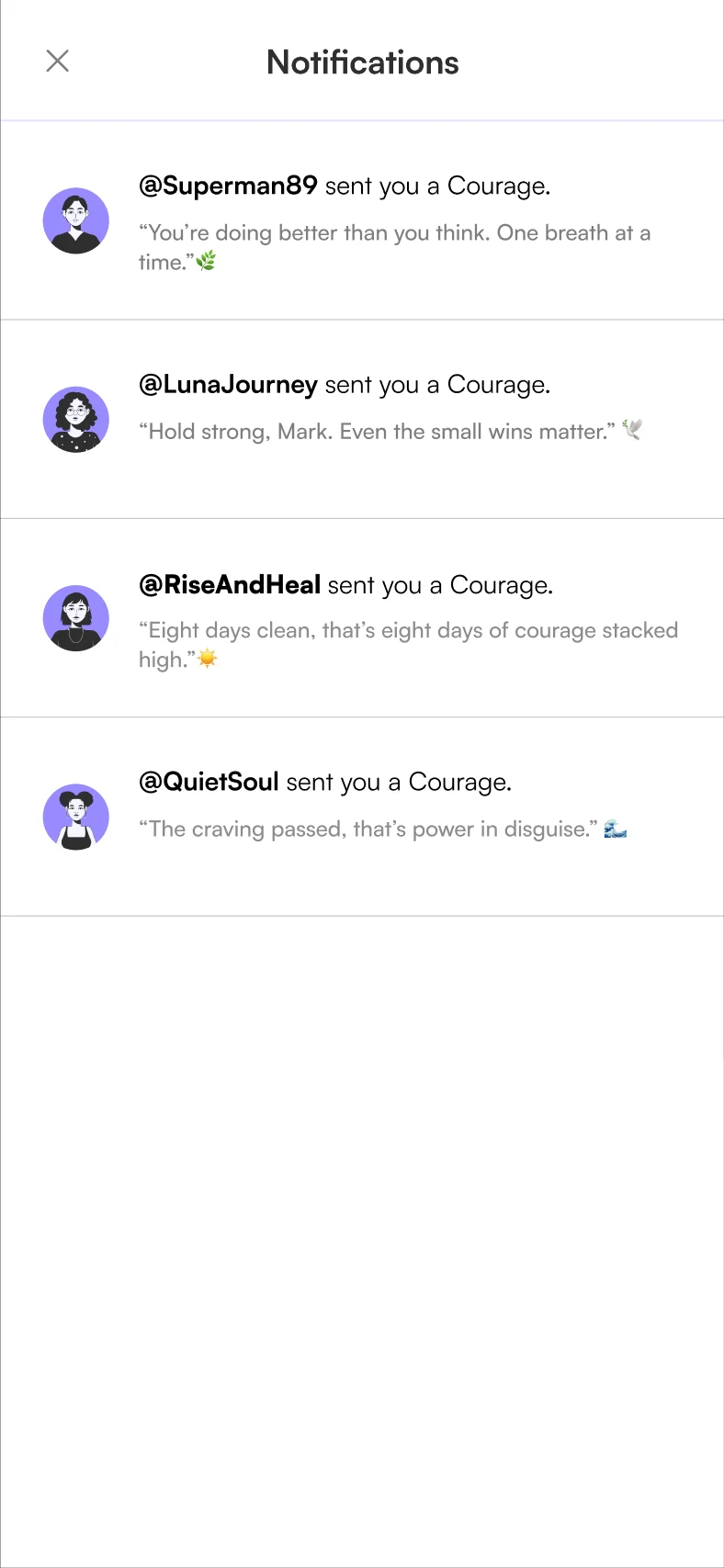
  • A Courage sent in the Circle arrives as a gentle notification and is counted on the receiver’s profile, so support from others sits beside their own reflection.

03Key value moments

Where the reward comes from

  1. 01

    Being understood

    Courage.ai responds to a reflection with understanding, not advice. It picks out small wins and effort from the person’s own words, so writing brings relief instead of self-criticism.

  2. 02

    Sending a Courage

    Works like a “like” but carries emotional value: the receiver gets a short, supportive note such as “Keep holding strong today.”

  3. 03

    Sending a Message

    Works like a comment, but delivered privately as a gentle reply. “I felt the same last week. You’re not alone.”

  4. 04

    Weekly growth summary

    At the end of each week, a short summary of how the person has grown emotionally. No charts or numbers: “You’ve been calmer this week, even when you went out with your friends to have coffee.”

04Character system

Presence, not performance

  1. 01

    Present, not performative

    The characters do not smile excessively or look sad. They exist with calm, neutral expressions that mirror emotional honesty.

  2. 02

    Why it matters

    People using Courage may be dealing with shame, anxiety or self-doubt. Overly cheerful visuals can feel misunderstood, and sombre ones can deepen discomfort.

  3. 03

    Privacy and emotional safety

    Illustrated characters protect privacy while keeping human warmth. People feel part of a community that understands, not one that observes.

05User journey

From shame to being the inspiration

Six stages, from first seeing Courage to reaching a goal. Each was mapped with what the person does, where it happens, what they think and feel, the opportunity, and what the system does in the background.

  1. 01

    Awareness

    Sees Courage on the App Store or social media, reads “Your safe place to start healing” and decides to download. Opportunity: build trust through empathy-driven messaging.

    FeelsShame, fear of judgment, hope to change

  2. 02

    Onboarding

    Answers gentle questions: how many cigarettes a day, and why they want to stop. “This doesn’t feel like a therapy app, it feels human.” Opportunity: lower the shame barrier with conversational onboarding.

    FeelsNervous but curious, then relief

  3. 03

    Reflection and AI

    Starts a first reflection by typing into “How are you holding up today?” and gets an empathetic reply. “Writing this feels lighter than talking to anyone.” Opportunity: reinforce a daily reflection habit.

    FeelsSafe, understood

  4. 04

    Weekly growth

    Weekly summary cards are generated from the reflections. “I never noticed these small victories before.” Opportunity: visualise growth through stories, not stats.

    FeelsValidation, pride in progress

  5. 05

    Community support

    Scrolls the Circle feed and sends Courages to others in similar situations. “People here actually understand me.” Opportunity: promote healthy community accountability.

    FeelsSupported, grateful

  6. 06

    Progress and transformation

    Checks the profile for goal progress, reaches milestones and shares the story. “I relapsed, but I didn’t feel like I failed.” Opportunity: end the cycle with pride and inspire re-engagement.

    FeelsEmpowered, purposeful

06Design decisions

Screen by screen, and why

Each screen was written up with its intent, its visual choices and the emotional goal behind it. These are the choices that carry the most weight.

01

Splash: a group that is simply there

The first second should create calm, belonging and trust, and introduce the brand as a gentle companion, not a product that demands action.

Design choices

  • Neutral, steady expressionsA small, diverse group. No big smiles, no sadness, just presence, so anyone can see themselves without feeling judged or pressured.
  • Collective strengthThe quiet group at the bottom stands for shared humanity, not celebration. It is an emotional reset before the reflection begins.

Splash screen: the Courage wordmark, the line Your safe place to start healing, and six illustrated characters
02

Home: one input, one action

Checking in emotionally should be effortless, and progress should be shown without pressure.

Design choices

  • A softer question“How are you holding up today?” is softer than “How do you feel?” and validates tough days.
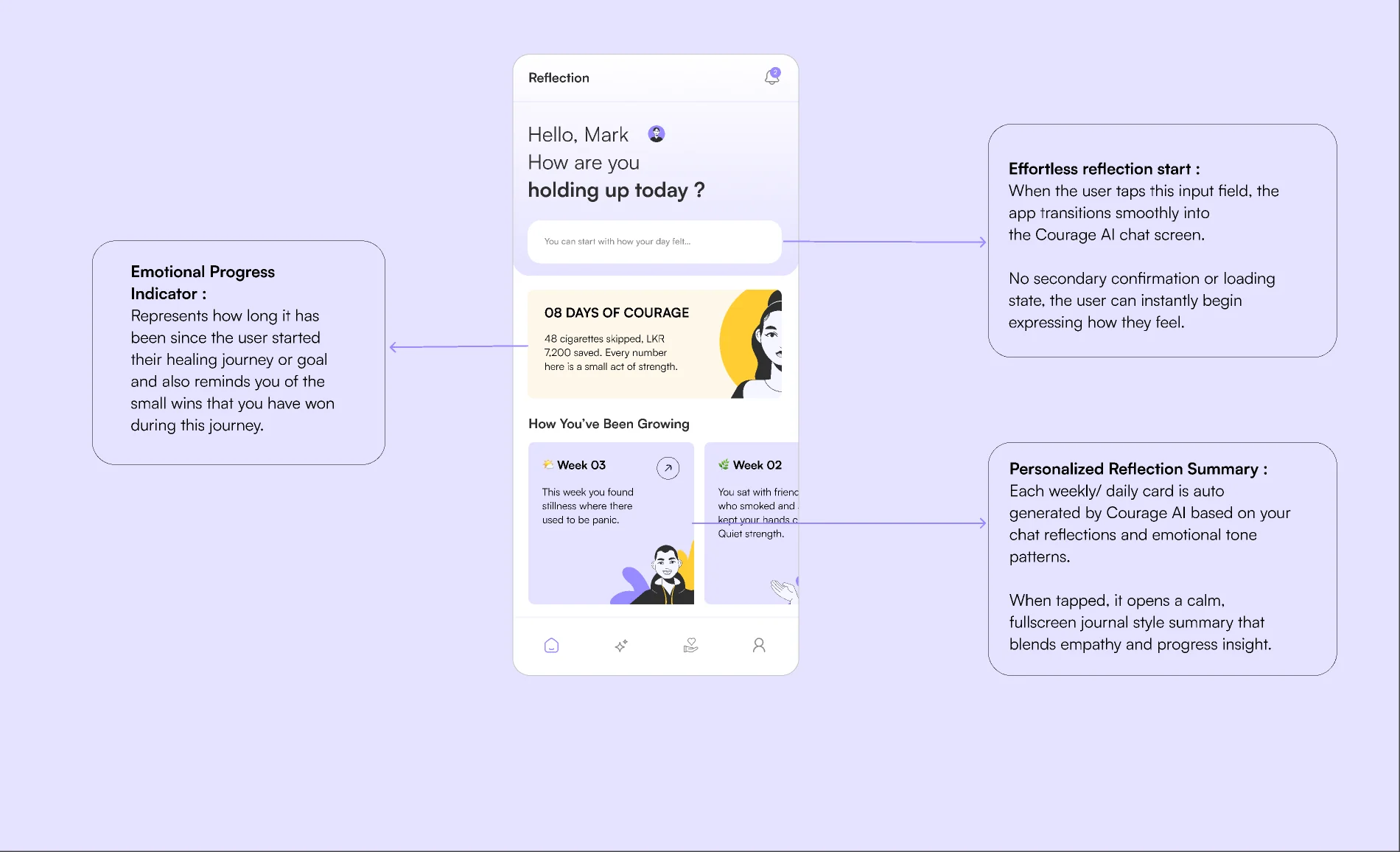
  • A conversation, not a formTapping the field opens the Courage.ai chat directly. No confirmation, no loading state.
  • Days of CourageReplaces harsh streaks with a calm summary of small wins: cigarettes skipped, money saved. The copy frames effort as courage, not compliance.
  • Weekly growth cardsA few skimmable cards generated from the person’s own words. Every element answers “Why should I come back tomorrow?”
Reflection home screen: Hello Mark, how are you holding up today, an 08 Days of Courage card and weekly growth cards
03

Chat: listened to, not analysed

A safe, one-to-one space where reflection turns into gentle conversation. The goal is for people to feel listened to, not analysed or corrected.

Design choices

  • Prompts that give permissionBubbles such as “I got a craving again today” and “I gave in once, but I’m trying not to feel guilty” lower the barrier to writing honestly.
  • Nothing else on the screenThe lilac gradient continues from home, but the navigation bar and cards are gone. The focus is fully on the dialogue.
  • A companion, not a botThe Courage.ai mark at the top keeps it part of the app. Over time these conversations feed the growth cards on home.
Courage.ai chat screen: Hello Mark, how are you feeling today, with four suggested thoughts and a message field
04

My Circle: a Courage instead of a like

A quiet space to share small victories, struggles and coping reflections with a habit group. The purpose is not to perform for others but to feel seen by people on a similar journey.

Design choices

  • Posts as journal entries“Skipped my morning cigarette today… it passed.” Posts normalise imperfection and celebrate resilience.
  • The Courage iconReplaces the traditional like. Sending one is about acknowledgment, not popularity, and can carry a supportive comment.
  • Minimal social noiseNo public metrics beyond small icons. The interface avoids dopamine-driven numbers in favour of meaningful gestures of support.
  • A calm plus buttonSits in the lower corner to encourage posting without demanding it.
My Circle feed: a post about skipping a morning cigarette, with a photo of a coffee cup, Courage and comment counts and replies
05

Profile: a relapse is not a reset

A moment to pause and see progress in a kind, human way. It is not about tracking perfection but about recognising effort.

Design choices

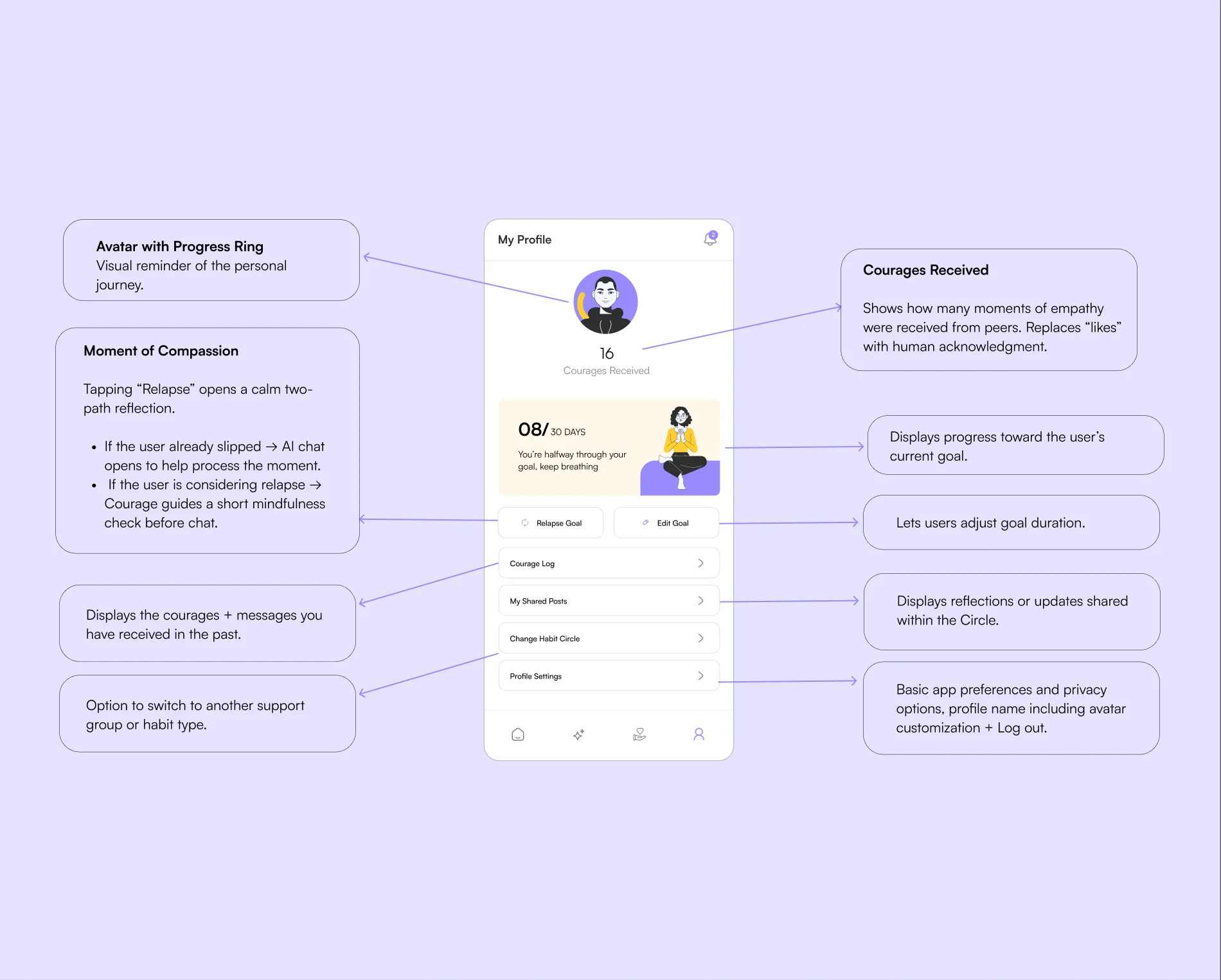
  • Courages receivedInstead of likes or streaks, the number shows how many supportive gestures have come from peers.
  • 08 / 30 daysThe progress card celebrates steady effort, with a supportive message that changes daily.
  • Relapse Goal beside Edit GoalThe two buttons sit side by side to show that change is not always linear. Goals can be adjusted or restarted without guilt.
  • A two-path reflectionTapping Relapse opens the AI chat if the person has already slipped, or a short mindfulness check if they are only considering it.
My Profile: 16 Courages received, a card reading 08 of 30 days, Relapse Goal and Edit Goal buttons, and links to the Courage log and shared posts

07Style guide

A palette for emotional safety

Lavender#988BFF
Soft lilac#E5E2FF
Warm yellow#FFCE33
Cream#FFF7EB
  • Lavender. The core brand colour, for calm strength and healing.

  • Soft lilac. A background tone that adds depth while staying emotionally soft.

  • Warm yellow. Introduces optimism and courage.

  • Cream. A hopeful counterpart to lilac: warmth and light, a reminder of progress and renewal.

08The work

The characters

Twelve characters stand in for the people in a Circle. They are used on the splash screen, as avatars and on the progress cards.

Twelve illustrated characters in black and white on lavender circles, each with a calm, neutral expression

09The work

Annotated screens

The Reflection screen with notes: the input opens the AI chat with no loading state, the Days of Courage card is an emotional progress indicator, and each weekly card is generated from chat reflections
The profile screen with notes on the avatar progress ring, Courages received, the goal card, the two-path relapse reflection, the Courage log, shared posts and switching habit circle

10The work

Final screens

  1. Splash screen

    01Splash

  2. Reflection home screen

    02Reflection

  3. Courage.ai chat screen

    03Courage.ai

  4. My Circle feed

    04My Circle

  5. My Profile screen

    05My Profile

  6. Notifications: four members of the circle have each sent a Courage with a short supportive note

    06Notifications

11Behind the scenes

What the AI does at each stage

  1. 01

    Sets the tone

    Emotionally safe, empathetic copy instead of marketing language. Every surface message is written to lower hesitation about change.

  2. 02

    Matches a Circle

    Uses the onboarding answers (habit type, intensity, goal duration) to place the person in the most relevant small support group, without making them search.

  3. 03

    Reads emotional tone

    Adjusts its manner in each reflection: gentle when the person is low, encouraging when they are gaining strength.

  4. 04

    Finds the small wins

    Summarises the past week into growth moments, reframing wins the person may not have noticed into progress cards.

  5. 05

    Keeps the Circle safe

    Checks the tone of posts and Courage messages before they are shared, and personalises notifications so support does not feel robotic.

  6. 06

    Stays with a relapse

    Watches milestones, relapses and restarts. Difficult moments get compassionate, non-judgmental messages; progress is celebrated quietly.